The digital age is rapidly evolving beyond simple online presence, moving towards a future where individuals possess dynamic, interactive, and autonomous digital counterparts.
This transformative era is heralded by the emergence of "Digital Doubles," a concept born from the powerful convergence of digital twin technology and verifiable identity frameworks. This section defines these core concepts and establishes the analytical foundation for understanding the profound implications of programmable humanity.
Defining "Digital Doubles"
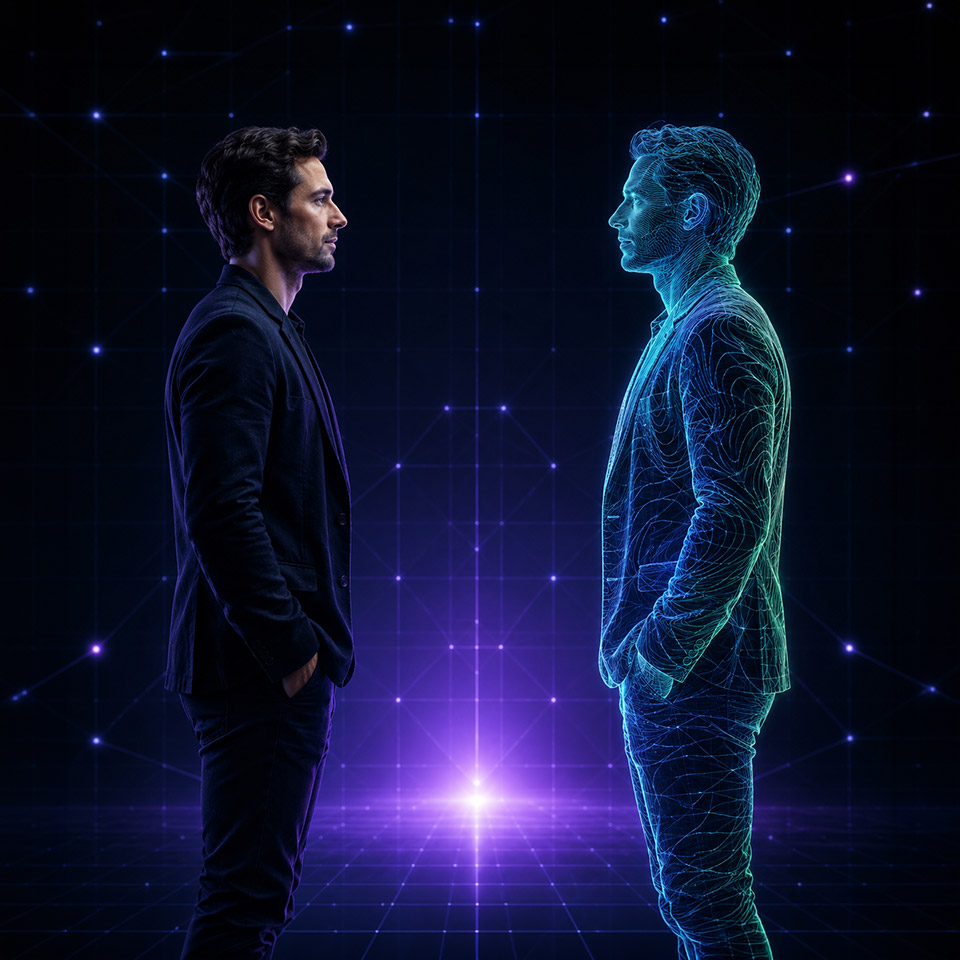
At its core, a Digital Double represents a sophisticated, dynamic virtual replica of an individual, meticulously constructed from their personal data and capable of interacting autonomously across digital and physical environments. This concept builds upon two foundational technological pillars:
Digital Twins
Digital twins are defined as dynamic, virtual replicas of physical entities, processes, or systems.
Their utility extends far beyond mere 3D modelling; they possess the remarkable ability to predict future behaviours through the continuous integration of real-time data, advanced modelling techniques, machine learning, and sophisticated simulations. Historically, digital twins have been instrumental in optimising industrial processes, such as simulating tyre performance in racing or streamlining production in smart factories However, their evolution has expanded significantly, now enabling the modelling of increasingly complex and open environments, including intricate human biological systems and entire business ecosystems. This progression highlights a shift from static blueprints to dynamic, predictive models that offer unprecedented insights into the operational nuances of their physical counterparts.
Programmable Humans
The concept of "programmable humans" emerges as the advanced manifestation of these digital doubles.
In this context, an individual's digital identity and comprehensive personal data are seamlessly integrated into a dynamic, interactive digital twin. This integration creates a self-optimising, customisable digital entity that can observe, learn, adapt, and even act on behalf of the individual it represents. The emergence of programmable humans is poised to drive entirely new forms of interaction and value creation across various sectors, from personalised healthcare interventions to automated financial management and adaptive workplace training. This evolution transforms passive digital representations into active, intelligent agents that extend human capabilities and presence in the digital realm.